
Hotels across the USA and Canada deal with the same daily problem. Guests ask for trip ideas, front desk teams answer the same questions again and again, concierge desks stay busy all day, and staff manually update recommendations when weather, events, or opening hours change.
This work takes time. A lot of time.
An AI itinerary planner helps hotels cut this workload in a real, measurable way. By automating trip planning, updating schedules in real-time, and guiding guests before and during their stay, hotels can easily save 7 or more staff hours every day.
Here, we explain exactly how that time is saved, where the hours usually get wasted, and how hotels can use AI itinerary planning in a practical, guest-friendly way.
This guide is written for hotel owners, general managers, marketing teams, and operations leaders in the USA and Canada who want fewer manual tasks, happier guests, and better use of their staff time.
Why Hotels Lose So Much Time on Guest Trip Planning
The Hidden Work Behind “Just a Few Guest Questions”
Many hotel teams underestimate how much time goes into guest planning support. A single guest might ask:
What should we do today?
Is this attraction open?
What if it rains tomorrow?
Can you suggest a family-friendly plan?
Is there something romantic nearby?
Each question seems small. But when multiplied across dozens or hundreds of guests, it turns into hours of work.
Front desk staff look up opening hours. Concierge teams check weather updates. Marketing teams prepare PDFs or email suggestions. Operations teams handle last-minute changes when plans fall apart.
This is not one task. It is dozens of small tasks spread across the day.
Manual Planning Does Not Scale
Hotels in the USA and Canada serve guests from different regions, languages, and travel styles. Some are families. Some are couples. Some are business travelers adding leisure time.
Manual planning does not scale because:
Staff availability is limited
Local information changes daily
Guests expect instant answers
Staff turnover creates knowledge gaps
The result is wasted staff time and inconsistent guest experiences.
What an AI Itinerary Planner Actually Does for Hotels
It Automates the Most Time-Consuming Tasks
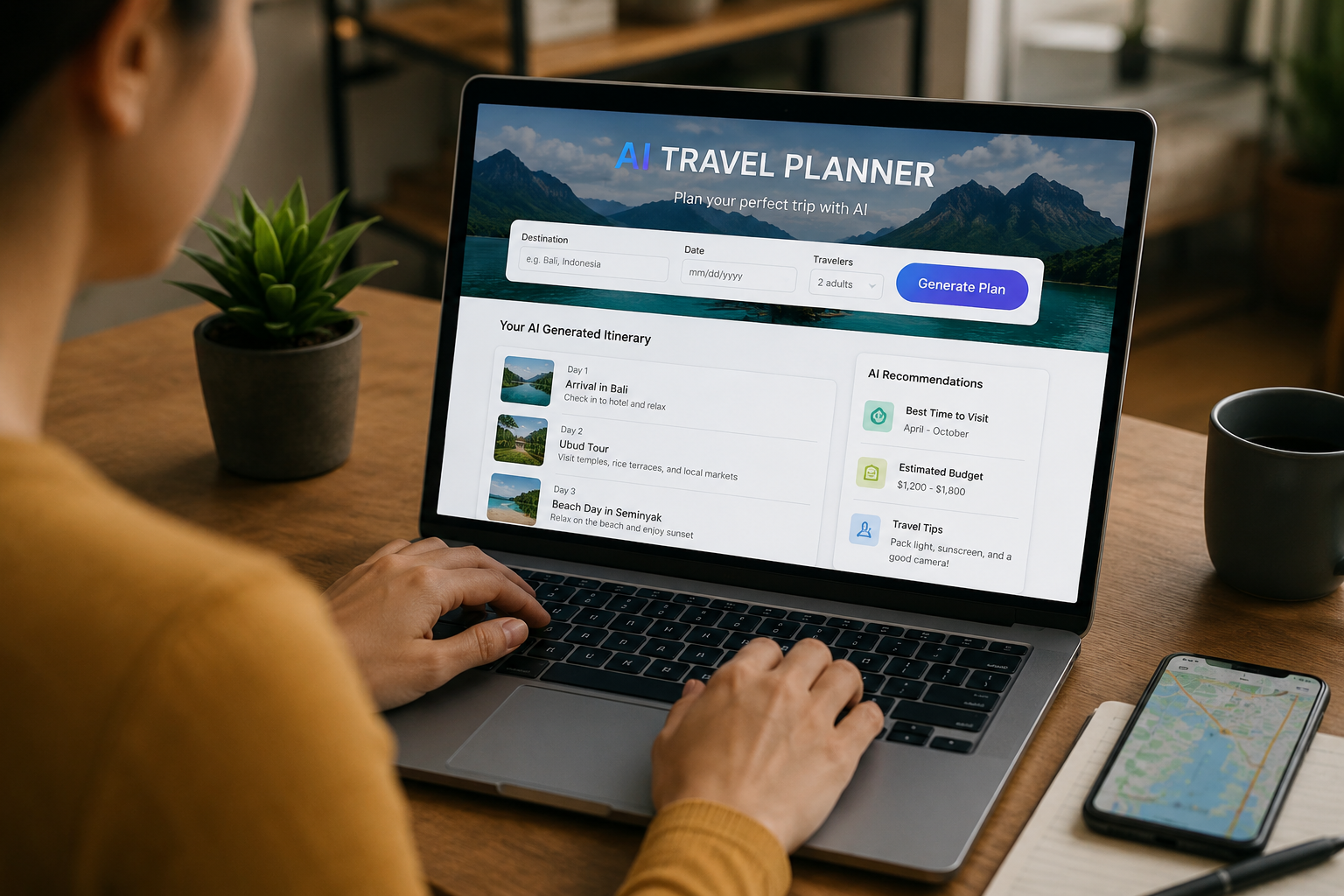
An AI itinerary planner is not just a list of attractions. It is a system that:
Builds daily travel plans automatically
Uses verified local data like hours and locations
Adjusts plans based on weather or closures
Works on mobile without extra apps
Updates itself without staff input
This removes the need for staff to manually create, update, and resend plans.
It Works Before, During, and After the Stay
Most hotel planning help happens after guests arrive. That is already too late.
An AI itinerary planner works:
Before arrival, to help guests plan their stay
During the stay, to guide daily activities
After disruptions to adjust plans automatically
This spreads the workload across automation instead of staff hours.
How Can Hotels Save 7+ Daily Hours with an AI Itinerary Planner?
1. Hour 1 to 2 Saved at the Front Desk
Front desk teams spend a large part of their day answering repetitive questions.
With an AI itinerary planner:
Guests get self-serve trip plans
FAQs are answered inside the planner
Staff, stop repeating the same explanations
Hotels commonly reduce front desk planning time by 1 to 2 hours per day.
2. Hour 2 to 3 Saved at the Concierge Desk
Concierge teams are skilled, but much of their time goes into routine planning.
AI planners handle:
Standard sightseeing plans
Family and couple itineraries
Nearby dining and attractions
Concierge teams can focus on complex, high-value guest requests instead of basic planning.
3. Hour 1 Saved on Weather and Disruption Handling
Bad weather causes chaos.
Without AI:
Staff check forecasts
Staff suggest alternatives
Staff update guests manually
With AI:
Plans adjust automatically
Guests see changes in real time
Staff involvement drops sharply
This easily saves one hour per day in busy seasons.
4. Hour 1 to 2 Saved on Emails, PDFs, and Messages
Many hotels still send:
Planning emails
PDF guides
Custom messages for each guest
AI itinerary planners replace this with live, always-updated plans.
Marketing and guest services teams save hours by not creating or updating documents.
5. Hour 1 Saved on Internal Coordination
Without AI, staff often check with:
Other team members
Local partners
External websites
AI planners use a centralized, verified data source. This cuts internal back-and-forth and confusion.
Why This Matters More in the USA and Canada?
Guests Expect Digital Convenience
Travelers in the USA and Canada expect:
Instant answers
Mobile-friendly tools
No printed guides
No waiting at the desk
Hotels that rely only on human support fall behind guest expectations.
Labor Costs Are High
Staff time is expensive. Saving 7 hours per day can mean:
Lower overtime costs
Better staff focus
Improved service quality
AI itinerary planning directly impacts operational efficiency.
What Makes a Good AI Itinerary Planner for Hotels
1. Real-Time Accuracy
A planner must use live data. Static content causes guest frustration.
2. White-Label Branding
Guests should feel the tool belongs to the hotel, not a third party.
3. Multi-Language Support
Hotels in the USA and Canada serve international guests. Language support is essential.
4. Mobile and Offline Access
Guests use phones, not desktops. Offline access helps during travel.
5. Analytics and Usage Insights
Hotels need to know what guests actually use and prefer.
Simplified.Travel Helps in Hotel Operations!!
Hotels looking for a practical AI itinerary planner can use Simplified.Travel because it fits into existing workflows instead of replacing them.
1. Built for Hotels, Not Just for Travelers
Simplified.Travel allows hotels to:
Offer personalized stay plans on their own website
Include hotel events, spa services, and dining
Promote local partners in a controlled way
The tool stays fully branded to the hotel.
2. Smart Automation That Saves Time
Key features that reduce staff workload include:
Scout for building itineraries using verified local information
Watchdog for live updates when weather or closures occur
Wayfinder for multilingual guest support
Wingman for booking activities inside the plan
Insight for understanding guest behavior
Hotels do not need to manually update or monitor plans. The system handles it.
3. Easy Setup Without Technical Headaches
Hotels can add the tool through:
Plug-and-play modules
API integration for custom setups
No app downloads are needed. Guests access plans directly on the hotel website.
Experience Simplified.Travel Today:
Real Hotel Use Cases That Save Time Daily
1. Resort with Daily Activity Schedules
A resort uses AI planning to combine:
Pool activities
Spa appointments
Nearby attractions
Guests see a full daily plan without calling the desk.
2. City Hotel Serving Business and Leisure Guests
Business travelers extend stays for leisure. AI planners help them plan evenings and weekends without staff involvement.
3. Boutique Hotel with Limited Staff
Smaller hotels save the most time. One AI planner replaces hours of manual guest support.
Key Takeaways for Hotel Decision-Makers
Hotels lose hours daily on manual trip planning
AI itinerary planners automate repetitive guest requests
7 or more staff hours can be saved each day
Guest satisfaction improves through instant, accurate planning
Staff focus shifts to higher-value service tasks
Tools like Simplified.Travel fits naturally into hotel operations.
Popular Questions Around AI Itinerary Planning
1. How does an AI itinerary planner help hotels save time?
It automates trip planning, updates schedules in real time, and reduces manual guest interactions. This removes repetitive staff work.
2. Is an AI itinerary planner expensive for hotels?
Compared to staff hours saved, costs are usually lower than hiring additional staff or paying overtime.
3. Can AI itinerary planners replace concierge staff?
No. They handle routine planning, so concierge teams can focus on complex guest needs.
4. Do guests actually use AI itinerary tools?
Yes. Guests prefer mobile, self-serve planning tools, especially in the USA and Canada.
5. Can hotels customize AI itinerary planners?
Yes. Good tools allow full branding, content control, and local partner selection.
Additional Benefits Hotels Often Overlook
Better Guest Reviews
Guests appreciate smooth planning and fewer disruptions. This reflects in reviews.
Stronger Local Partnerships
Hotels can highlight approved partners inside itineraries.
Sustainability Support
AI planners can suggest efficient routes and local options, reducing unnecessary travel.
What Hotels Should Do Next to Save Time!
Hotels in the USA and Canada cannot afford to waste staff hours on tasks that software can handle better. Guest expectations are higher. Labor costs are rising. Manual planning no longer makes sense.
An AI itinerary planner is not about replacing people. It is about giving staff their time back and giving guests a better experience.
If your team answers the same questions every day, sends planning emails, updates guests about the weather, or creates custom itineraries manually, those 7 daily hours are already being lost.
The next step is simple. Review where your staff spends time on guest planning. Identify the repetitive tasks. Then consider how an AI itinerary planner for Hotels, used thoughtfully and naturally, can take that load off your team while improving guest satisfaction.





Write a comment ...